
The War Within
On Resistance and the Call to Create

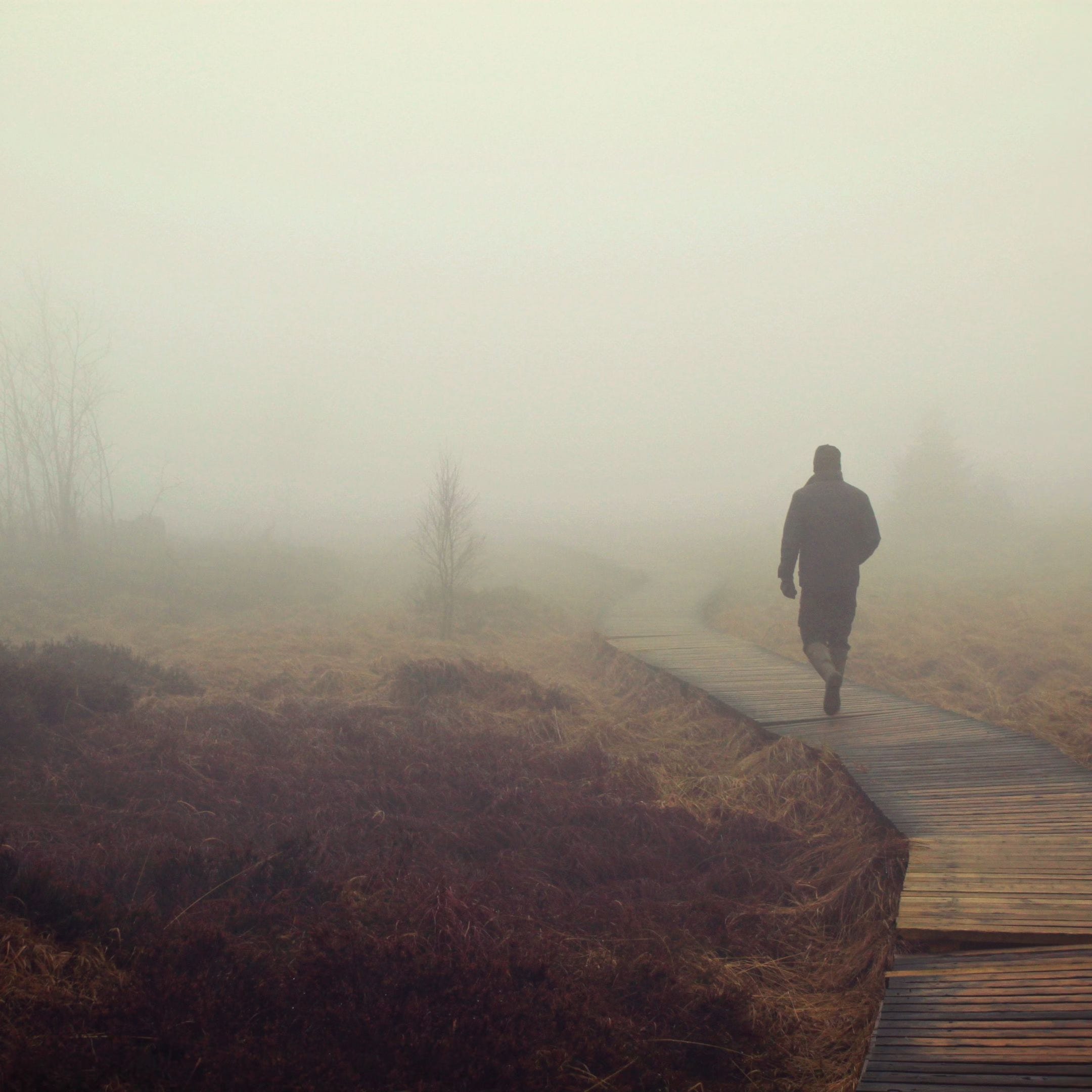
What would you do if you knew you couldn’t fail? What would you create if you knew that every risk, every stumble and every imperfect attempt was already overcome or forgiven? And I don’t mean hoping you wouldn’t fail. I mean knowing that you couldn’t fail. Knowing in your bones that everything would work out in the end, that you were safe to begin.
Most people don’t stop trying or doing something because they’ve failed. They stop because they’re afraid they might. They’re afraid to be seen trying. Afraid to care so much it hurts. Resistance usually arrives before the first sentence is written, before the first risk is taken. A lot of the time it creeps up without us even realising it’s there. It tells us that we’re not ready, or that somebody else has already done it better. It makes us question what will happen if we fall short, or even worse, what if nobody even cares.
This is how resistance works, it disguises itself as logic, as timing, sometimes even as perfectionism. But make no mistake, it’s fear in its most pernicious form. And it doesn’t come for trivial things, it only visits when something real is at stake. It comes for your calling, for things that you’re called to do or create. I like to describe it as appearing at the corners of your growth, at the edge of your becoming, the invisible force that rises the moment you move toward what you were born to do (as Steven Pressfield so brilliantly describes in this video).
The neuroscience of fear and creation
From a scientific lens, resistance is the collision between two forces in the brain, the limbic system (which governs fear and survival) and the prefrontal cortex, which governs imagination and creation. Every time you move toward something uncertain, whether it’s a blank page, a new business or a bold idea, your amygdala fires. It interprets the unknown as danger. The same circuits that once helped our ancestors avoid predators now treat creative risk as existential threat. This is why starting something new feels so difficult, like you’re standing on a cliff’s edge. It feels that way because neurologically, it is.
Yet the act of creation activates an entirely different neural network, the default mode network (the system behind imagination, daydreaming and insight). In flow states, this network synchronises with the executive control network, integrating intuition and action. That integration (when fear quiets and creation flows) is where genius comes from and lives. So when you feel resistance, it’s not a sign that you’re weak. It’s a sign that your brain is standing at the threshold of expansion. You are about to rewire who you are.
The psychology of meaning and avoidance
Psychologists call this tension approach avoidance conflict, the simultaneous pull toward what we desire and the push away from what terrifies us. We procrastinate not because we’re lazy, but because our goals are charged with meaning. The greater the personal significance, the more our subconscious guards against possible failure or rejection. When we think about fear in this way, it acts as a sort of guiding light, pointing directly towards what matters most. So when resistance creeps up and tells us that we’re not ready, it is sometimes the voice of awe. You’re standing before something that matters. The more sacred the work, the more your spirit quivers in its presence.
The sacred work of creation
Steven Pressfield (who is one of my favourite writers) said that “Creative work is not a selfish act - it’s a gift to the world.”
To withhold what’s within you, whether that’s the story, the song, the idea, the invention, that is denying the world something it needs. Human beings are wired to create.
Neuroscience shows that acts of creation activate dopamine (the neurochemical of drive and purpose) and oxytocin (the neurochemical of connection). To make something from nothing is to feel alive, purposeful and intertwined with something larger than ourselves. We don’t create for recognition or the applause, we create because it’s how we make sense of who we are. It’s how we touch the heart of what it means to be human. It’s how life expresses itself through us, how existence catches its own reflection in the things we make. Through the brushstroke, the line of code, the melody, the leap, etc.
The alchemy of resistance
Resistance only appears when you’re facing the work that could transform you. It is both your adversary and your teacher. Your shadow and your summons. If you listen closely, you’ll realise that the trembling before you begin, the hesitation, the self doubt, the inner storm…it’s exactly what you’re supposed to go through. Kind of like an initiation. It’s a sign that you are doing what you were meant to do, becoming who you were meant to be.
And the antidote to resistance is action, as opposed to inspiration. The moment you begin, even when it’s tough and imperfect, fear loses its power. The nervous system stabilises, the prefrontal cortex re-engages and the brain releases endorphins that reinforce momentum. This is how courage is built, through the act of doing, not before the act.
Why the world needs your gift
Here’s the really important point about all of this. Your creative work, whatever form it takes, is not for you alone. When you bring forth what’s within you, you give others permission to do the same. Your courage liberates their courage, your honesty becomes something they can latch onto. Your creation, born from your resistance, becomes someone else’s relief. We each have a responsibility to not withhold what might move, change or heal someone, something only we can bring into the world.
The next time fear rears its ugly head, the next time resistance taps us on the shoulder, remember that this voice is proof that something real is at stake. That you’re standing at the frontier of meaning. That you are alive and because of this you are called to create.
So why not begin? Why not build the thing only you can? Why not give the world the gift that’s been waiting inside you all along? Because resistance only shows up where your greatness begins.