
Pressure is a Privilege
The psychology of high stakes moments and why we misread them

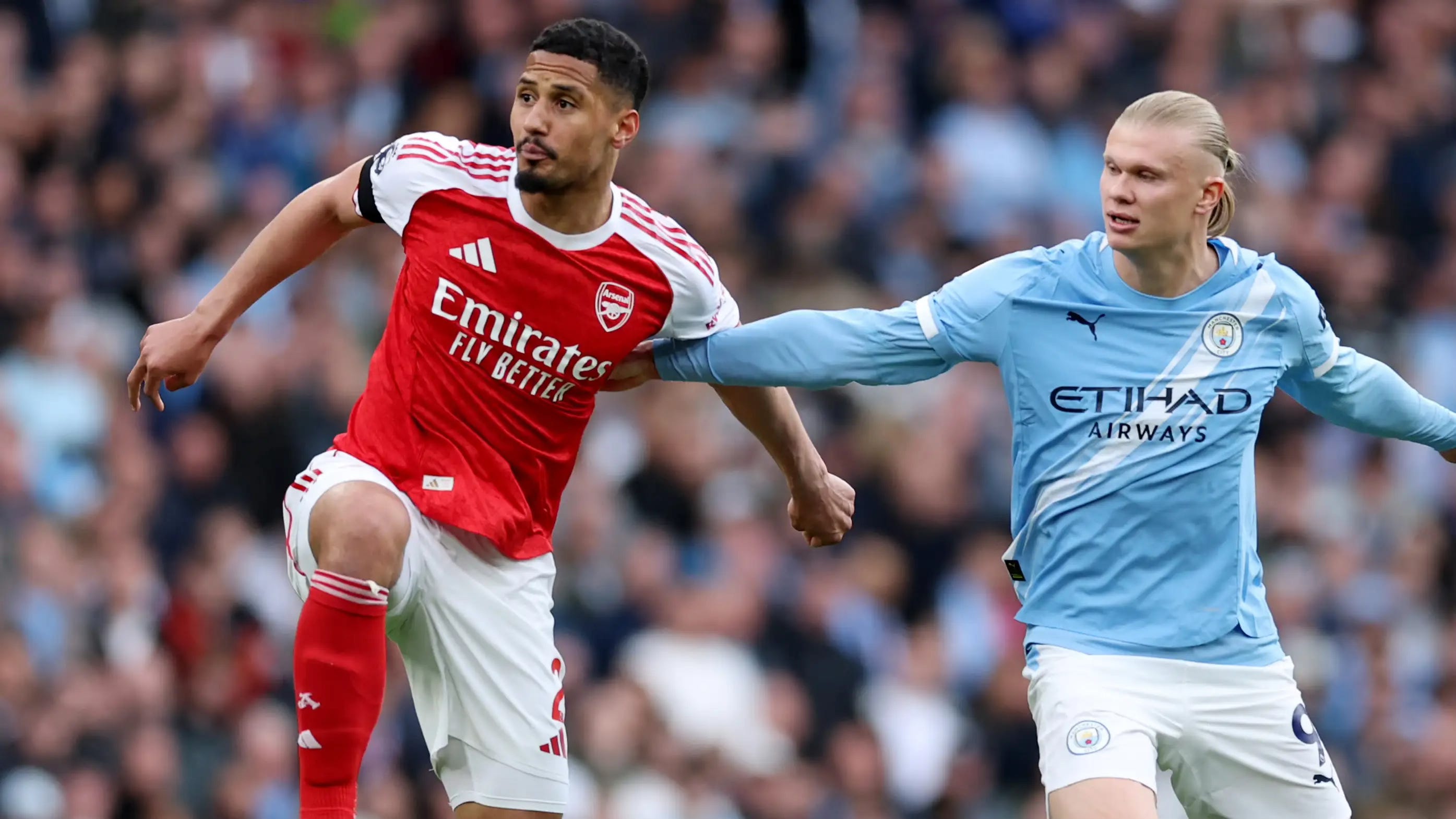
This is actor Tom Hiddleston speaking before Arsenal’s clash yesterday with Manchester City, a game that had already been framed as one of the biggest in recent Premier League history. A match that before a ball was even kicked carried the weight of the entire season (maybe even the weight of legacy), and there was/is a sense that whoever won would go on and lift the title. It didn’t go my way for the record (I’m an Arsenal fan), but that’s not the point.
Moments that make you feel alive
The point that I want to talk about is what Hiddleston said before the game, and how it matters far more than what happened during it. He was talking about the big moments, the ones that exist on a different altitude to everything else. A game 7, a final, a penalty in the 90th minute, a boardroom where everything is on the line, the first day of a new chapter (or maybe the last day of an old one). These are the moments we are terrified of when they arrive, but they are also the moments we spend the rest of our lives trying to get back to. Ask any athlete who has truly been inside one of these moments (the ones with real consequence and weight and real jeopardy) and they will tell you the same thing. It often takes years, but eventually with some distance and some honesty, they say that they would give almost anything to feel that again. To feel that level of intensity, that level of meaning, that level of aliveness.
The feeling that never leaves you
Jonah Lomu, in the final years of his life, didn’t speak most about the tries he scored or the teams he dismantled. He spoke about the dressing room before the game. The atmosphere and electricity. Paul Scholes, one of the most decorated players in English football history, retired twice. The second time he said it was because he just missed the feeling. Not the winning, but the feeling of a big game, when everything mattered and everything was uncertain and you were completely, irreducibly present. There is a neuroscience to this, and it is profound.
The biology of being alive
When we enter genuinely high stakes situations, when the outcome is uncertain, when the crowd is watching, when something meaningful is at stake, our brain doesn’t respond mildly. It is flooded with chemical signals. Noradrenaline surges and the heart pumps harder. Attention narrows and every system in the body sharpens toward the task. We call this being nervous, or scared, or anxious. But underneath those labels there is something extraordinary that is happening. We are fully awake. More alive (at a biological level) than we are in almost any other moment of our ordinary lives.
Why it’s so hard to let go
This is why these moments are so hard to let go of. This is why retired athletes talk about a specific kind of grief. It’s not the grief of losing the sport itself, but the grief of losing the intensity the sport delivered. The sense that everything mattered. That the stakes were real and they were burning with vivid colour. The tragedy is that so many athletes never actually inhabit these moments while they are inside them because they are too busy trying to escape them.
Why calming down doesn’t work
There is a remarkable body of research on what happens when human beings encounter high stakes situations, and the central finding (which is counterintuitive but consistently replicated) is that when we feel the physiological activation of pressure, most of us immediately try to suppress it. We are told to calm down or we tell ourselves to calm down. We breathe slowly, we try to reduce our arousal, we attempt to quiet the storm. And it doesn’t work. Not really, not when the stakes are high enough.
From anxiety to excitement
Researchers at Harvard (led by the incredible Alison Wood Brooks) discovered something that changes everything about how we should think about this. Anxiety and excitement are physiologically almost identical. The racing heart, the elevated breathing, the sharp attention - these are shared features of both states. What separates them isn’t what’s happening in the body, it’s the story we tell about what’s happening in the body. The psychological term for this is reappraisal. And its power is rooted in the simple biological fact that anxiety and excitement are neighbours. Calm (or calmness), by contrast, is in another postcode entirely. When we try to suppress our activation in moments of pressure, we ask the nervous system to travel too far too fast. We almost never make it. We end up somewhere grey and disassociated and under resourced. But when we reappraise, when we look at those sweating palms and that hammering heart and say this is excitement, this is my body getting ready, we make a shorter and achievable (and physiologically intelligent) journey. We are channeling the activation instead of suppressing it.
Pressure an opportunity not a threat
“What a privilege to be the league leaders. What a privilege to be the only English side still in the Champions League. What a privilege to have Manchester City, managed by Pep Guardiola, chasing you.” This isn’t positive thinking in the shallow motivational poster sense. This is something altogether more precise. This is what sports psychologists and cognitive scientists call challenge appraisal, the reframing of a high stakes situation not as a threat to be survived, but as an opportunity to be taken advantage of.
The physiological consequences of these two framings are completely different.
How framing shapes performance
When we appraise a situation as a threat, the body releases cortisol and adrenaline in patterns that constrict and brace, that prepare for damage limitation. Muscles tighten, working memory narrows and attention fragments. Performance suffers exactly when we most need it to flourish. When we appraise the same situation as a challenge (as an opportunity) the response is energising rather than constricting. Adrenaline is still released, but in ratios and patterns that enhance rather than impair. Attention sharpens productively. The body leans toward the moment rather than bracing against it. LeBron James once said before a decisive Game 7, “what pressure? This is a privilege.” The same high stakes that terrify most people had become, for him, the reason to be grateful he was there.
Moments that make us feel alive
Here is what we know now. The moments that feel the most terrifying (the ones with the most pressure attached, the highest stakes, the greatest weight of expectation) are not obstacles to living well. They are living, in its fullest, most embodied and most awake form. We are most alive when it matters most. And we understand this with extraordinary clarity in retrospect. The retired athlete grieving the feeling, the executive who misses the big decision, the performer who can barely look at their old stage photos without feeling the loss. They are mourning the aliveness. They are mourning the rare air.
Claim the moment
The work then (and this is the work), whether we are an Arsenal midfielder walking out at the Etihad with the title on the line, or a student before a significant exam, or a surgeon before a procedure, or anyone standing at the edge of a moment that genuinely matters, is not to escape the feeling. It is to claim it. To say that you are excited, because you are. To say that this is a privilege, because it is. To look at the pressure and understand at a deep and biological level that the pressure is what it’s all about. The pressure is the proof that you are somewhere real, it’s proof that the stakes are genuine. Proof that this is not ordinary life, lived on a low frequency beat. This is the high definition version. This is colour and texture and volume where everything else is greyscale.
We spend our lives trying to feel safe, and in doing so we numb the very thing we’re actually looking for. These moments, the ones we spend so much energy trying to survive, they are the ones we will spend years trying to find our way back to. The moments that scare you, the moments that stretch you, the moments that feel like they matter too much, those are the moments where life is most fully lived.
Run towards the moment
Not many people ever get to play in a game that decides a league title. Not many people ever get to stand in those conditions and feel that weight and discover in real time what they are made of. Mikel Arteta’s players know this. Pep Guardiola’s players know this. And the research is unambiguous, the ones who run toward that feeling (who reappraise the pressure as the privilege it genuinely is) will have more access to their ability in those moments than the ones who spend their energy trying to escape it.
The gift is here right now
Decades from now, when these players are long retired, they will sit somewhere quiet and someone will ask them about their careers. And they will talk about trophies and goals and assists and managers and teammates. But what they will feel, somewhere in their bodies, is what they experienced in afternoons like yesterday. They will be back in the rare air briefly. And they would give almost anything to stay there. The gift is they are there right now. The only question is whether they know it.
When your moment arrives (on a pitch, on a stage, in a boardroom, in a conversation that matters), don’t shrink from it, don’t try to calm it away, don’t wish it smaller. Enjoy it. Because one day, sooner than you think, it will be gone. And you will realise that it wasn’t pressure you were feeling. It was life, in its purest and most beautiful form.