
Norway's Beautiful Sporting Secret
The philosophy behind a sporting superpower

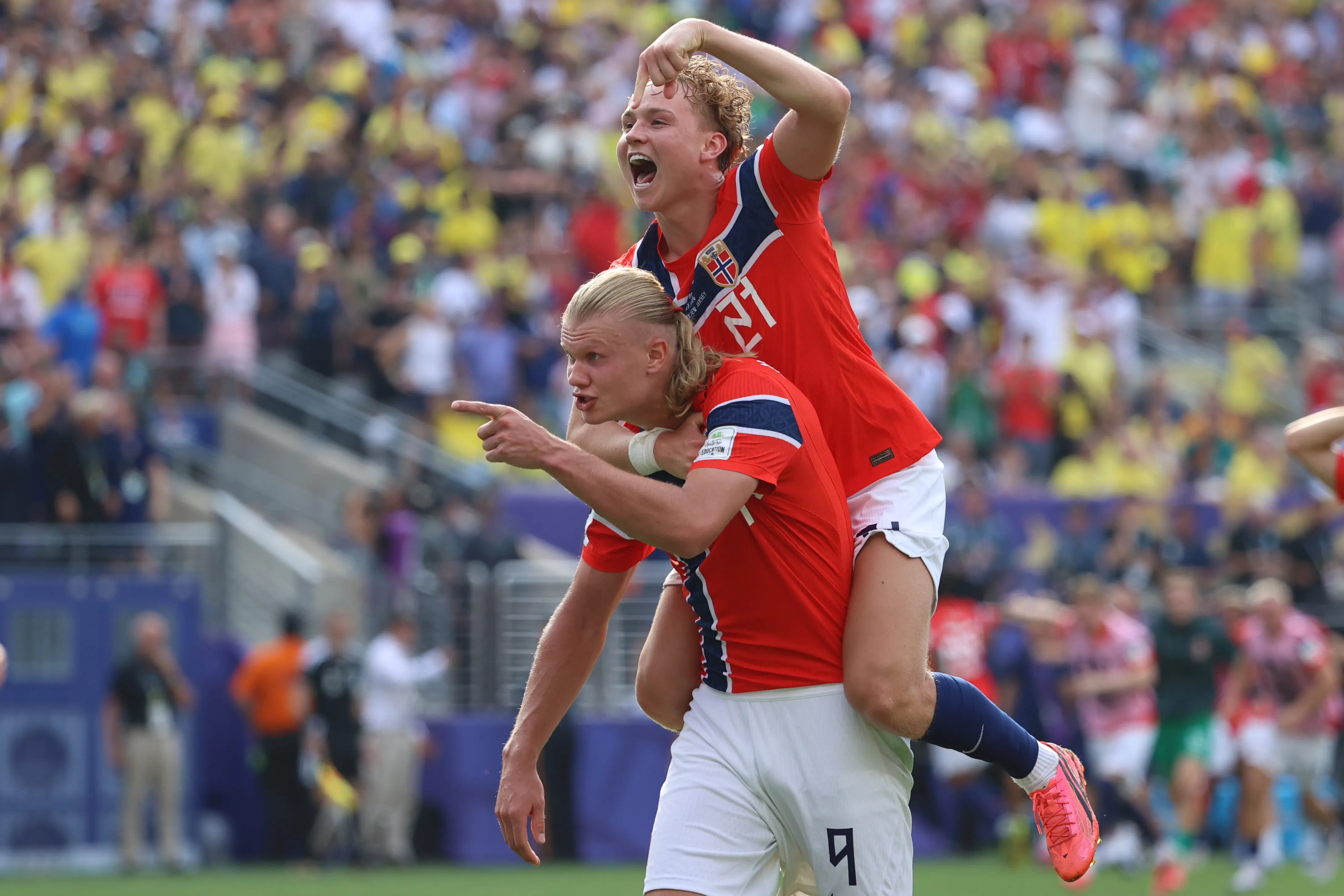
We should all be paying attention to Norway right now. This small nation of just over five million people has become one of the world’s great sporting superpowers. After returning to the Football World Cup for the first time in 28 years, they have now (inspired by the brilliance of Erling Haaland) toppled Brazil, one of football’s great empires.
Whether it’s football, winter sports, athletics, golf, chess, endurance events or elite competition more broadly, they keep producing extraordinary performers. Think back just a few months to the Milano Cortina Winter Olympics. Norway finished on top of the medal table once again, winning a record 18 gold medals and 41 medals overall. A country smaller than many of the world’s major cities outperformed sporting giants like the United States, China and Germany. Now they’re doing it on football’s biggest stage.
What’s their secret, how do they do it? As I reflect on this, for me the more important question isn’t how Norway wins. It’s why. And the answer is not brute force funding, early specialisation or hyper competitive childhood academies. The answer is something I’ve been speaking about a lot over the last couple of years. It’s something very simple. They protect joy.
Fun first, winning later
In Norway, until the age of 12, there is no scorekeeping, no rankings, no league tables and no cutting of players. If one child gets a trophy, everyone gets a trophy. The philosophy isn’t to create young winners. It’s to create lifelong athletes. The winning comes later. Norway’s Children’s Rights in Sport framework prioritises enjoyment, inclusion and long term development over immediate results. The philosophy isn’t to create young winners, it’s to create lifelong athletes. The winning comes later.
Delayed pressure
From a neuroscience perspective, this is genius. When sport is framed around fun, dopamine drives curiosity and exploration, cortisol levels remain lower, intrinsic motivation develops, identity forms around love of the activity rather than fear of failure (‘I love this’ rather than ‘I must prove myself’). Contrast that with early pressure systems, where chronic stress elevates cortisol, narrows attentional focus, accelerates burnout and wires performance to fear. Norway deliberately delays introducing pressure into sporting and schooling environments and that delayed pressure builds durable performers.
The power of the wide net
Tore Øvebrø, Norway’s director of elite sport, said something really interesting when interviewed by CNN a few days ago. He said that “selection is another way of getting rid of people. We are few. We have to take care of everybody.” Looking at this Norwegian football team, it’s difficult not to wonder how many of these players would have been filtered out in systems obsessed with identifying talent too early.
In larger systems, talent identification often becomes talent elimination. Early bloomers are mistaken for long term potential and late developers are filtered out. But Norway cannot afford to discard late bloomers, so they don’t. They cast a wide participation net, and by the age 25, 93% of Norwegians have participated in organised sport. This matters enormously from a probability standpoint. Elite performers are statistical outliers. The more children you keep engaged, the more likely rare combinations of physiology, psychology and work ethic emerge. It’s mathematically optimal as well as (in my opinion) much more humane.
Multi-sport, multi-skill, multi-dimensional
Norwegian children are encouraged to play multiple sports. The reason is because diversified movement builds motor coordination, physical literacy, adaptive nervous systems and broader social intelligence. Research consistently shows that early specialisation increases overuse injuries and burnout risk. Multi sport development strengthens connective tissue, expands neural patterning and fosters resilience (David Epstein talks about this wonderfully in his book ‘Range’). When children try different sports, they encounter different cultures, roles and identities. They develop a stable sense of self where they’re not attached to a single outcome. By the time elite pressure arrives, they know who they are. That is the bedrock of mental toughness.
Collaboration over silos
Whether it’s football, skiing, athletics or Olympic sport, coaches, scientists, psychologists and athletes in Norway constantly share knowledge across disciplines. There are short lines of communication. Silos are inefficient in small countries, so they don’t tolerate them. The culture is built on collaboration, communication and care. High performance ecosystems thrive on knowledge transfer. When science informs coaching and coaching informs science, feedback loops tighten and innovation accelerates. This is systems thinking at its finest.
Egalitarianism as competitive advantage
Norway’s sporting success mirrors its economic success. It tops global indices for inclusive growth, has among the lowest income inequality in the world and translates economic prosperity into broad living standards. In sport this means that child is priced out. Used equipment markets flourish and government funding supports access. Wealth is not a gatekeeper to participation, like it is in so many countries. Talent is not filtered by family income, and when access expands, so does participation. When participation expands, excellence emerges. In exclusive systems, talent is lost to affordability. In inclusive systems, talent compounds.
Pressure arrives - but at the right time
Norway is not anti-competition, it simply sequences it properly. Once athletes choose the elite pathway (by adolescence or early adulthood) they enter highly structured and scientifically supported programs. But by then motivation is self chosen, love for the sport is intact, bodies are physically prepared and identities are stable. At that stage, intensity becomes something positive rather than threat. From the perspective of performance psychology, this is everything, and it aligns very closely with self determination theory. Autonomy, competence and relatedness drive intrinsic motivation, and intrinsic motivation sustains deliberate practice over decades. Norway builds autonomy first, and then mastery follows.
A national philosophy
What is perhaps most inspiring is that this philosophy extends far beyond football or the Olympics. Norway is prosperous not just because of oil revenues, but because of structural inclusiveness, educational investment and social trust. They prioritise quality education, STEM development, gender equality, research and innovation and collective agreements that protect workers. I don’t want to get too political, but I strongly believe in this ideology and these philosophical principles. Raise the floor and the ceiling rises. This holds for society and sport, but also human development.
What can we learn?
The Western model, in many cases, has mistaken early specialisation and intense focus as the drivers and prerequisites for excellence. But the Norway model and case study proves that you don’t build champions by squeezing children early. You build them by keeping them in love long enough. Joy isn’t soft (something I’ve heard numerous times on American sports and chat shows). Joy leads to retention, it leads to resilience and it leads to repeatability. Joy is what keeps someone training on dark winter mornings. And perhaps most importantly, joy is what shapes extraordinary people (not just extraordinary athletes).
The biggest lesson
What we’ve been watching with Norway is the visible outcome of a philosophy that has been compounding for decades. A system designed not to manufacture winners, but to protect what is possible. And that’s the part that matters for all of us, because this lesson transcends football. Whether we’re raising children, leading organisations, building teams or pursuing our own craft, the principles remain remarkably consistent. Protect joy early, broaden the base, delay destructive pressure, collaborate generously and let identity grow before outcomes define it.
The Western world often assumes excellence begins with pressure. Norway’s example suggests that maybe excellence begins with belonging. Maybe it begins with curiosity and by allowing people to fall in love with the thing before asking them to become exceptional at it. Norway keeps producing champions because it understands something many of us forget. Winning isn’t the starting point, joy is. And it might just carry Norway further in this world up than anyone imagined.
This is the best article I've read all year. So many important lessons for us all - especially parents - but as you say, this is also applicable to life beyond kids and sport. Thank you for articulating this so beautifully, it's such an important topic.
What an amazing article @Hassan Khan . My husband just read it to me via his email and I loved it so much. We have both watched the game today and I have to say now a lot from what I have seen makes sense after I read your article. And weren’t the drums 🪘 just in the end amazing ✨