
Impossible is Nothing
The beauty of the underdog and why stories like Cape Verde's allow the rest of us to dream a little bigger

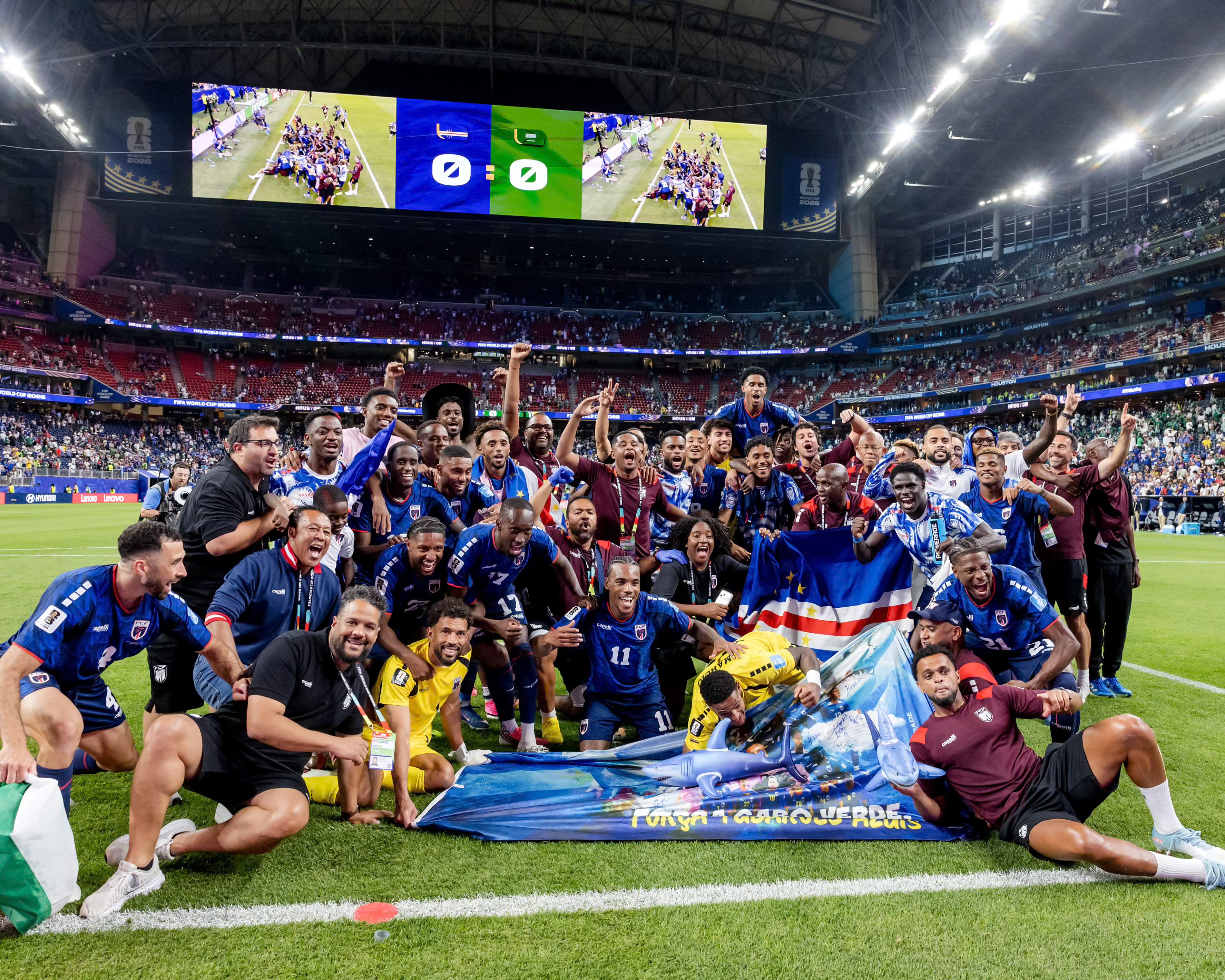
What did we just witness? For more than 110 minutes, half a million people made the world believe. A nation of just over 500,000 stood toe to toe with the defending world champions at the Football World Cup and refused to accept the story everyone else had already written for them. They weren’t supposed to be there. They certainly weren’t supposed to belong. And yet somehow, for one incredible evening, they competed with one of the greatest football teams on earth.
They lost, but somehow that isn’t what I’ve been thinking about. I’ve slept on the result, replayed the game in my mind and keep coming back to the same thought. Every once in a while, sport gives us something much bigger than sport. It gives us a story that reminds us who we are, who we could become and why we should never stop believing in possibilities that seem impossibly far away. That’s the real power of the underdog.
The Underdog Advantage
The greatest underdog stories aren’t really about the underdog. They’re about the rest of us. We don’t fall in love with them just because they upset expectations. We fall in love with them because, for a little while, they allow us to imagine that perhaps the boundaries we’ve accepted in our own lives aren’t as fixed as they seem. They make the impossible feel negotiable and they remind us that the future has not yet been written.
There’s a reason stories like this stir something so deep inside us. Most of us know what it feels like to be underestimated. We know what it is to be overlooked, to be told that we’re too inexperienced, too old, too small, too late or just plain not good enough. We know what it is to carry dreams that seem wildly disproportionate to the circumstances we find ourselves in.
Cape Verde held up a mirror to all of those thoughts and feelings, and in that mirror we saw every part of ourselves that has ever believed we were capable of more than the world had yet recognised. Maybe that’s why the psychology of the underdog is so fascinating. One of the strangest things about being the underdog is that it can become your greatest psychological advantage. The favourite has something to protect. Their reputation and ranking, their legacy and the expectation that they should win. Every mistake feels expensive because there is so much to lose.
The underdog often walks onto the pitch carrying freedom. Freedom creates lightness and is an extraordinary performance enhancer. Pressure has a remarkable way of pulling our attention away from the present. Instead of playing the game that’s in front of us, we start protecting futures that haven’t happened yet. What if I fail? What if I let everyone down? What if this defines me? Attention narrows, muscles tighten and ceativity disappears. We stop expressing ourselves and start protecting ourselves.
The underdog often escapes that trap. Instead of asking, “What if we lose?” they ask a far more liberating question. “Why not us?” That single question is more powerful than we could ever imagine. It changes everything. The mind rarely performs to the level of its talent. It performs to the level of what it believes is possible. Psychologists call this self efficacy. Not confidence in the abstract, but the conviction that this challenge, in this moment, is within your capabilities. It’s one of the most powerful ideas in psychology because the body rarely attempts what the mind has already declared impossible.
Playing Without Fear
Cape Verde didn’t suddenly become more talented than Argentina. But for long stretches they believed something that many people watching never did. That this game could actually be won. Belief changed how they defended, it changed how bravely they attacked, it changed the risks they were willing to take, the energy they played with and the courage they found when they twice came from behind against the world champions.
Belief is a force that changes behaviour instead of being wishful thinking. And behaviour changes outcomes. That same fearlessness ran through everything their manager said during the tournament. He kept returning to the same idea, to play without fear. Don’t think it’s because nothing was at stake, but because fear has a way of making us smaller than we really are. Playing without fear doesn’t mean the pressure disappears, it means refusing to let pressure become the story. It means deciding that the dream is bigger than the possibility of failure.
You could see it everywhere. In the 40 year old goalkeeper who dreamed of saving a Lionel Messi free kick and then actually did it. In the defender who spent years working in a bank in Ireland and almost ignored the message inviting him to play international football because he assumed it was spam. These are wonderful and charming anecdotes, but they’re also reminders that extraordinary stories almost always begin with ordinary people refusing to close the door on possibility.
Dreams rarely arrive looking important. Sometimes they arrive as a message you’re tempted to ignore. Other times they arrive at forty years old when everyone else assumes your best days are behind you. Or disguised as an opportunity that seems far too big for someone like you. The people who experience extraordinary moments are often simply the people who keep preparing long enough for extraordinary moments to find them.
Permission to Dream
This is the lesson that I can’t stop thinking about. We often think hope is something fragile, that it’s something sentimental, something that belongs in fairy tales rather than the real world. But hope is remarkably practical. It changes where we place our attention and the effort we’re willing to invest. It changes whether we persist after setbacks or surrender to them. It changes whether we dare.
Every great achievement in human history began as something that looked improbable before it looked inevitable. Which is why we need stories like this. It isn’t because they prove impossible things happen every day. They certainly don’t. Most underdogs lose like Cape Verde lost. But for one unforgettable evening they stretched the boundaries of what the rest of us believed was possible. They showed us and they proved that rankings are not destiny. That the gap between where you are today and where you might one day arrive is rarely as fixed as it appears. That belief can carry people much further than logic sometimes predicts.
Somewhere all of us are Cape Verde. All of us have dreams that seem too ambitious and goals that feel beyond our reach. Moments where we are the smallest person in the room, the least experienced, the least likely to succeed. Stories like this don’t promise that we’ll all win. They give us something far more beautiful. They show us that possibility is always larger than probability. That courage has a way of rewriting expectations. That belief is often the beginning of outcomes nobody else thought were available. And again, that’s why these stories stay with us long after the final whistle has blown.
For a little while, they allow us to dream again. And there may be nothing more beautiful than that.
Beautiful article. Well said and what a ride Cabo Verde! Felt very lucky to have participated with their journey and I found myself reflecting on the same this morning. Self belief and the maturity of that keeper. Just wow 🙌